
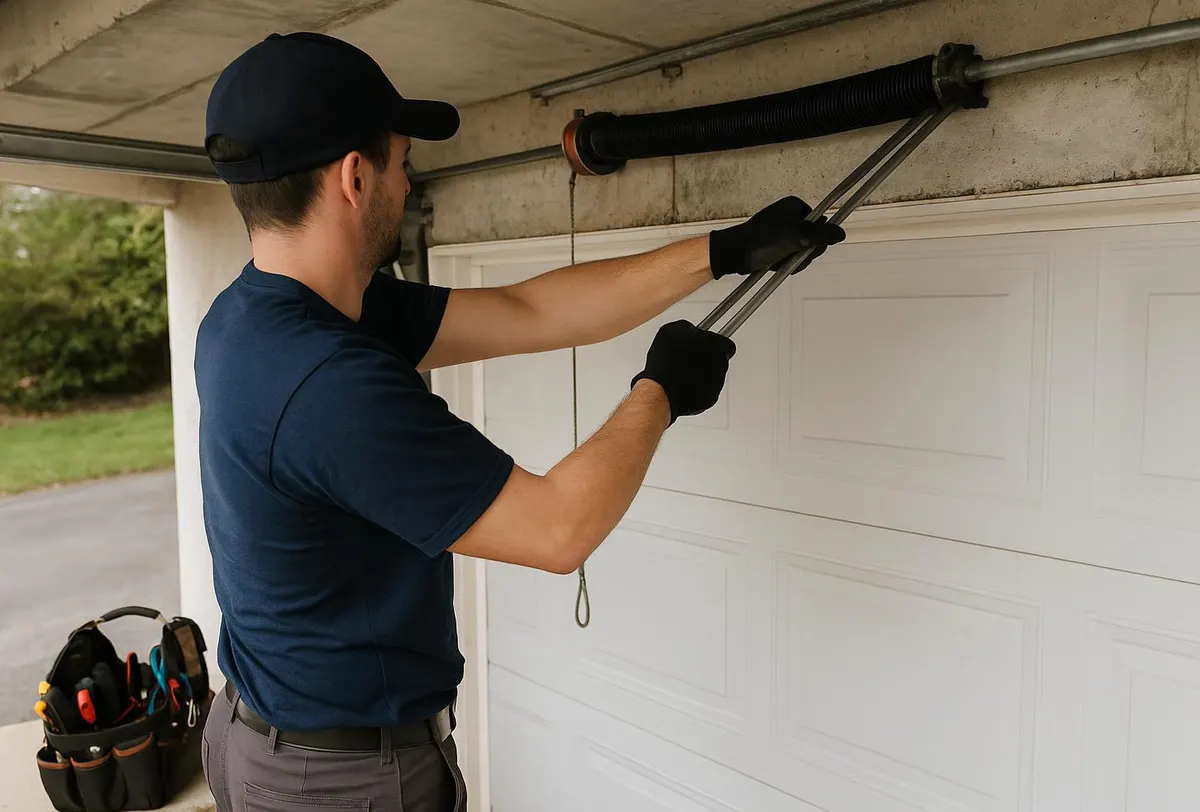
Short answer: before the first hard freeze hits, check your weatherstripping, test your springs for wear, lubricate the moving parts with the right product, confirm your opener's safety sensors are aligned, and look over the tracks and hardware for rust from fall rain. Do this in October or early November, not after the first ice storm, because cold snaps are exactly when small problems turn into stuck doors and snapped springs.
Why Winter Is Rough on a Garage Door Here
New Castle County doesn't get brutal, sustained cold, but it gets the worst kind of winter weather for garage doors: wide temperature swings, icy mornings after a warm afternoon, heavy rain that turns to sleet, and the occasional coastal storm that drives wind and moisture straight at the door. Add in a housing mix of older homes with original hardware and newer builds with factory-installed openers, and you've got two very different sets of weak points. Older doors tend to have worn weatherstripping and springs that have seen a decade of temperature cycling. Newer doors usually have better insulation but can still suffer from sensor and alignment issues if the slab has settled even slightly.
Check the Weatherstripping and Seals
The rubber seal along the bottom of the door and the strips along the sides do more work in winter than any other time of year. After a humid summer, that weatherstripping has likely expanded, cracked, or pulled away from the track in spots. Run your hand along the bottom seal and side seals looking for gaps, flattening, or tears. If you can see daylight around the edges when the door is closed, cold air and wind-driven rain will get through. Replacing weatherstripping is a straightforward DIY job on most doors and worth doing now rather than after you've already got a drafty garage and a damp floor from the first winter storm.
Test the Springs Before the Cold Snaps Them
Steel springs lose flexibility as temperatures drop, and a spring that was already near the end of its life cycle in September can fail outright in January. You won't be able to tell exactly how much life is left just by looking, but you can watch for warning signs: the door feels heavier when you lift it manually, it jerks or hesitates partway through its cycle, or you hear a loud bang from the garage (a classic sign of a spring snapping under tension). If your springs are original to an older home, or if you haven't had them inspected in several years, now is the time to get them checked rather than finding out the hard way on a sub-freezing morning when you need to get to work.
Lubricate the Moving Parts the Right Way
Cold makes metal contract and grease thicken, which is why doors that ran smoothly all summer suddenly start grinding or sticking in winter. Lubricate the rollers, hinges, and springs with a silicone-based or lithium-based garage door lubricant — not WD-40, which is a cleaner and degreaser, not a long-term lubricant, and will actually dry out and gum up in cold weather. A light coat on the tracks, rollers, and hinge points reduces strain on the opener motor and keeps the door from binding when the temperature drops overnight.
Inspect the Opener and Safety Sensors
Condensation is an underrated problem for garage door openers heading into winter. Humid fall air combined with cooling nights can cause moisture to collect on the photo-eye safety sensors near the bottom of the tracks, which makes the door refuse to close or reverse unexpectedly. Wipe both sensor lenses clean and make sure they're still aligned — a small bump from a bike, ladder, or parked car is enough to throw them off. While you're at it, test the battery backup if your opener has one; power outages are common during winter storms here, and a backup battery is the difference between being stuck outside in sleet and rolling the door up manually in the dark.
Look at Panels, Tracks, and Hardware for Rust
Heavy fall rain is hard on exposed hardware, especially on older doors where the original hinges, rollers, and track brackets may already show surface rust. Check for rust creeping into moving joints, loose bolts on the track, and any panel damage from summer storms that hasn't been addressed yet. A track that's slightly bent or out of alignment won't necessarily stop the door from working now, but ice buildup in winter can turn a minor misalignment into a door that jams solid.
Don't Forget Insulation on Older Doors
If you've got an older, uninsulated steel or wood door, winter is when you'll feel it most — a noticeably colder garage, condensation on the inside of the panels, and higher heating costs if the garage shares a wall with living space. Retrofit insulation kits are a reasonable DIY option for many door styles, though a full insulated door replacement is worth considering if the door is old enough that the springs, opener, and weatherstripping all need attention anyway.
When to Call Wilmington Door & Opener
If your springs show wear, your opener's sensors won't stay aligned, or your door is sticking and grinding no matter how much you lubricate it, it's time to call in. We handle spring replacement safely — these are under heavy tension and not a place to improvise — and our garage door maintenance service covers a full pre-winter inspection of tracks, hardware, weatherstripping, and the opener in one visit, so you're not guessing what else might fail once the ice sets in.
Get your garage door checked before the first freeze. Call Wilmington Door & Opener today to schedule winter maintenance anywhere in Wilmington, DE and the surrounding area.